

Suzhou Classic Gardens
By Xiaoting Qin

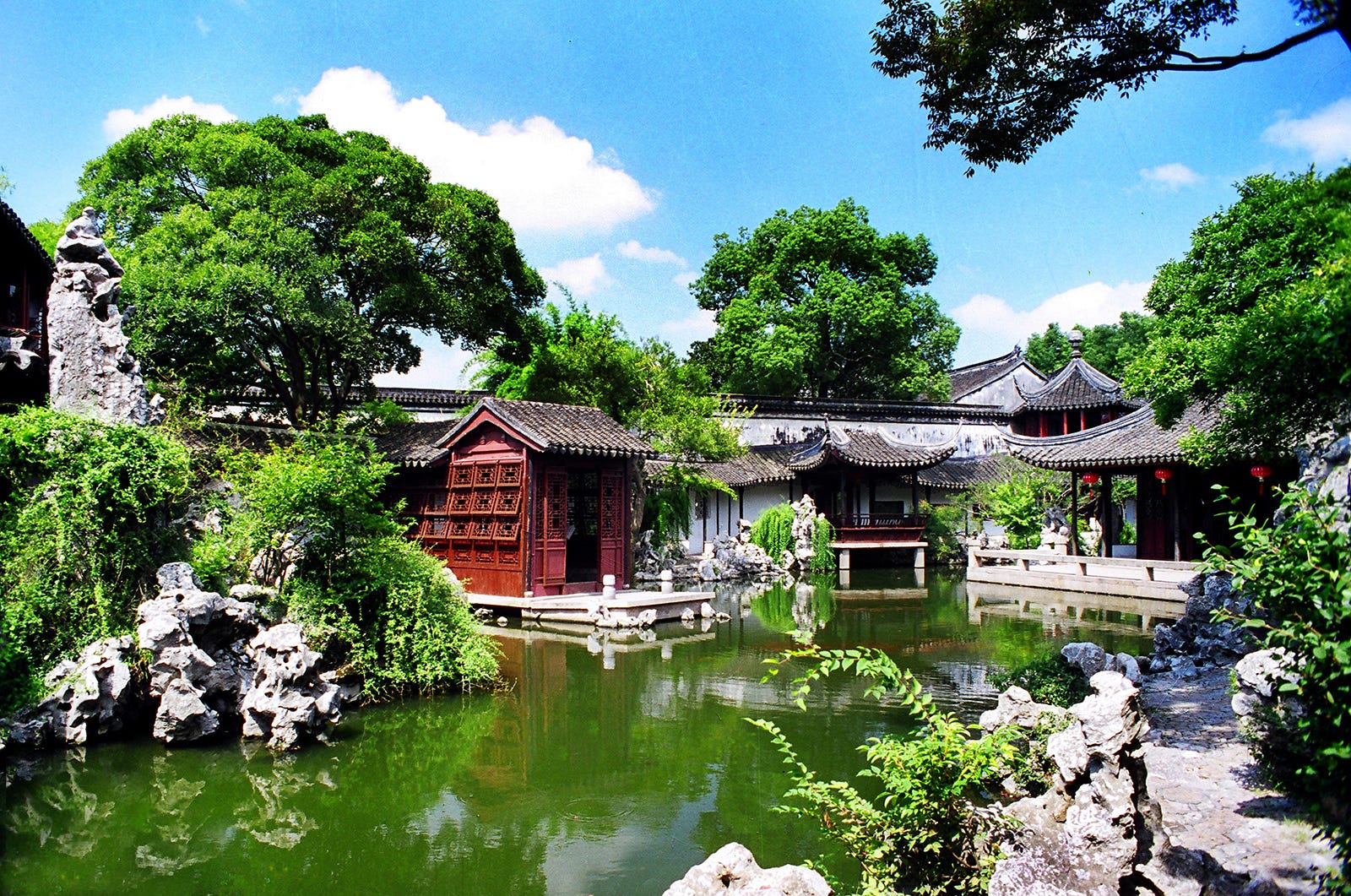
The World Heritage Committee has appraised it as a model of “recreations of the universe in miniature”. We all have a longing for beauty and our inherent pursuit has created the art of it. It is Suzhou Classic Garden.
According to Tong Jun, author of the book A Record of Gardens of Southern Yangtze River Delta, Suzhou Classic Gardens, which has an infinite layout in a limited space, “its simplest needs are all contained in the construction of the word “Yuan”. So, what is Yuan? “Yuan” means garden, and is represented by the Chinese character “園” . We can divide the character — and the garden — into four parts, each representing one key element of the Suzhou Classic Gardens. The first part represents Rockery, because it literally means wall and it splits the outside, just as the rocks and stones of the Suzhou Classic Garden split up the layout of the garden. The second represents Architecture, because it looks like the main structure of the building. The third is similar in shape with the first one but smaller and represents Water, because it means the pool and there’s water in it. The fourth represents Plants because they look like trees.
I was born and raised in Suzhou. I have deep affection for Suzhou Classic Gardens and I was a member of the World Heritage Club. Immersing in the diversity of cultures and the beauty of heritage sites, I decided to research more on this topic.
Rockery, as one of the four key elements, is famous for decoration and separation. Ye Shengtao, author of Preface to Suzhou Gardens, claims that “The Rockery can be said to be an art rather than a technology... It’s all about the designers’ and craftsmen’s life experience.” For instance, the idea of the Rockery in Suzhou Museum, created by famous architect Bei Yuming, is extracted from ancient Chinese poetry and landscape paintings. This idea is also employed in Suzhou Classic Gardens, as the Rockery fits well in the landscape. In gardens, Taihu stones are mainly used as decoration. They come in various shapes and reflect the beauty of “wrinkle, leak, thin and transparent”, with graceful and gentle aesthetics. You can explore the beauty in Lingering Garden, with the Cloud Capped Peak. Yellow stones are sometimes used as walls to separate gardens from the outside noise. The rockery includes Lion Grove and Mountain Villa with Embracing Beauty. Such separation can even allow people to play hide and seek and have fun.
Water is famous for fluidity and diversity. Most water in Suzhou Classic Gardens is flowing water. Just as the famous poet and philosopher Zhu Xi once said, “How can it be so clear and cool? For water fresh comes from its source”, it reflects the characteristics of flowing water. Suzhou is the land of fish and rice, with abundant water resources. For example, more than 60% of the Humble Administrator’s Garden is water. The reflection of water also shows great diversity. Surrounding the water are plants carefully chosen according to the way their seasonal colours reflect off the sparkling water below. In autumn, it’s very colourful with red and yellow leaves. In summer, it is vibrant green, while in winter it’s tranquil white. The reflection in the water can also extend the vision and imagination. The lotus-filled pond, for instance, looks like a landscape painting that excites the imagination. You can walk among the water, enjoy the moment and everyone can find their unique experience depending on their mood that day.
Architecture is famous for construction and connection. Ji Cheng, author of the book The Craft of Gardens, believes that gardens are skillful in “cause” and “borrow”. “Cause” requires the designers to take the law of nature. In The Master-Of-Nets Garden, we can see the landscape of significance, a perfect combination of Rockery, Water, Architecture and Plants. In the Humble Administrator’s Garden, the With Whom Shall I Sit Pavilion is inspired from the classical poem by Su Tungpo “”With whom shall I sit? Bright Moon, gentle Breeze and myself”. “Borrow” means to enrich the landscape and transcend nature. Through the lattice window, we can enjoy the different scenery behind it. We can also embrace the magical charm of light and shadow, with the change of time in a day, and the season in a year.
Plants are famous for their poetic symbols and harmonious pursuit. As is mentioned in the book Classical Gardens of Suzhou, “The garden owners were not just interested in having a pleasant arrangement of plants and flowers: they used history, philosophy, art and architecture in their designs.” These plants often include plum blossom, orchid, bamboo, and chrysanthemum. They are poetic symbols of Gentleman’s Virtue. For instance, the orchid symbolizes nobleness and elegance. Bamboo symbolizes modesty and tenacity. Furthermore, these elements are not just to be enjoyed, but are expected to stimulate intellectual growth and make better people. What they represent advocates the ceaseless pursuit of self-improvement and embracing the world with virtue. Plants also represent human’s pursuit of living in harmony with nature. In Suzhou Classic Gardens, different plants are often arranged by seasons and blossom naturally without much human intervention. For example, in spring, we can enjoy Chinese Flowering Crabapple in full blossom.
We have appreciated the beauty of Chinese Gardens from one of its most time-honored representatives, Suzhou Classic Gardens. We’ve seen the four key elements of Suzhou Classic Gardens and how to appreciate them. But the beauty of gardens is far beyond what I mentioned in the essay, it needs to be explored personally. Just like the French sinologist Wei Ranfang says, “Whether as an academic perspective to understand civilization, or a public perspective to experience life, gardens are silent stories that we can slowly read.” Now, we can pay a bit more attention to Rockery, Water, Architecture and Plants, and then read our own page of Suzhou Classic Gardens.