

Audience Demon
by Gabriel Minaya

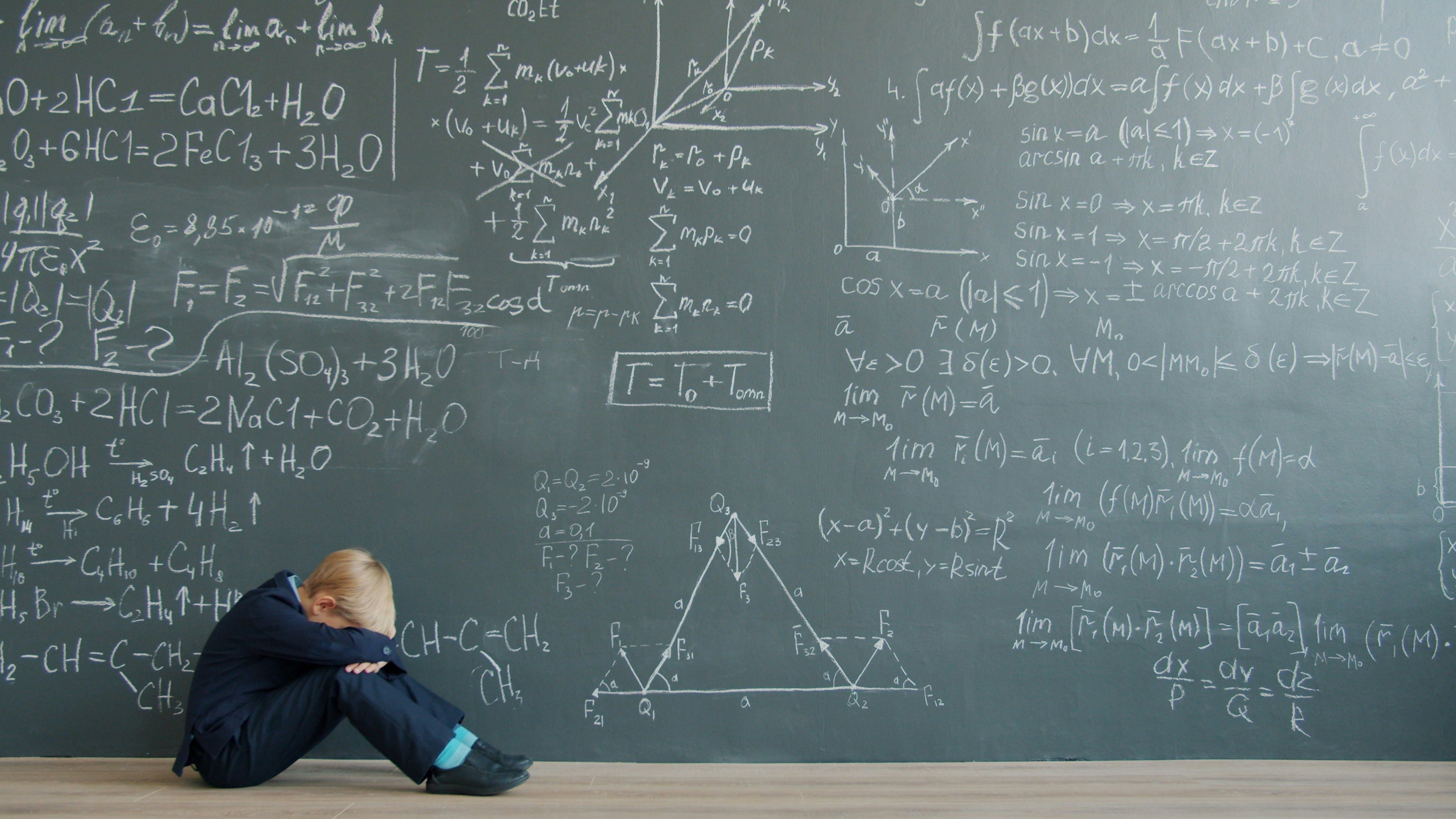
When I think about writing, I don’t just see the paper, the keyboard, or the blinking cursor on the screen. I see something else sitting with me in the room. Sometimes it’s behind me, sometimes hovering just above my shoulder, and sometimes I imagine it staring right through me. I call it the “audience demon.” It isn’t really a demon in the supernatural sense, but it feels just as real when I’m in the middle of a long assignment. The audience demon is the voice that keeps telling me I can’t write well enough, that someone is going to judge me the moment I put words down, and that my sentences are already wrong before I even finish them. It thrives off my stress, my procrastination, my fear of not being good enough.
But if I back up far enough, I see that the demon is not a newcomer. It’s stitched together from my whole disastrous archive of academic experiences: the time I stayed up until 3 a.m. writing a five-page paper that came back with a “D” scrawled in red ink; the tenth grade essay where my teacher wrote “awkward” in the margins so many times it looked like a chant; the oral presentation where I froze mid-sentence and my classmates stared at me like I had forgotten how English worked; the freshman-year research paper that required twelve sources, each formatted differently, and I lost points because my commas weren’t italicized “correctly”; the endless worksheets of sentence diagramming that made language feel like math punishment; the standardized test essay where I had to write about “a time I solved a problem creatively” and blanked so hard I wrote about reorganizing the dishwasher. All these memories sit like moth-eaten coats in the back of my closet.
And then there was the worst: junior year of high school, when Mrs. B assigned us to write an essay on Moby-Dick that was “at least 20 pages, double-spaced, with careful attention to how whales represent multiple layers of cultural, religious, and psychological symbolism.” I spent weeks trying to start that paper, surrounded by sticky notes, coffee cups, half-erased outlines. The day she handed back my draft, she announced in front of the class, “Some of you will never be able to write at the college level if this is the best you can do.” My paper had a “C-” on it. That moment the shame, the heat rushing to my ears, the laugh from the kid two rows back was the exact instant the demon took shape. And now, when I fixate on the absurdity of new assignments like the forty-page poetry essay, half in Portuguese, half in French the demon grows out of that memory. It emerges. It’s her voice, distorted, whispering that I’ve already failed before I’ve even opened the document.
The assignment itself is always absurd, cartoonishly so. Not just forty pages, but with strict formatting: every footnote in Times New Roman, 11.5, not 12, with citations alternating between MLA and Chicago “to demonstrate flexibility.” There’s a requirement that one paragraph must be written in the style of Homeric epic poetry and another in the voice of a cynical YouTube commentator. Students must submit a watercolor painting of their thesis statement. The rubric has thirty-seven categories, including “emotional resonance” and “aura of intellectual authority.” The professor warns that lateness will result in not just a grade penalty but a “public reckoning.” It’s academic theater, a circus of impossibility.
I sit at my desk, rereading the professor’s handout, my eyes snagged on the first line: This assignment will be the most important piece of writing you complete in your undergraduate career. I can’t look away. My chest tightens. The words warp. That’s when the demon appears uninvited but inevitable sliding out of the margins like ink coming to life.
Slow motion: I reach for my coffee cup. My arm rises like it’s moving through wet cement. My fingers extend, curling one by one, each joint clicking open with painful precision. The cup tilts toward my lips. Steam curls in the air, lingering far too long, every molecule visible. My eyes flicker, too slowly, toward the blinking cursor. The cursor doesn’t blink anymore it pulses, like a heartbeat. The demon is watching.
Zoom: On my desk, next to the keyboard, sits a small succulent in a chipped ceramic pot. Its green spikes radiate outward, thick and waxy, gathering light in ways my body cannot. I lean closer. A faint thread of spiderweb clings to one leaf. The soil is dry, cracked into little continents. Somehow, the plant keeps living, reaching upward without complaint. It is the opposite of the demon it does not whisper, it does not demand. It just is. For a moment, I let the plant’s patience ground me, a reminder of what Bhante Gunaratana calls “bare attention”: noticing without judgment.1
But the demon hates stillness. It manifests not just as a voice, but as a caricature of my old teacher. Her head balloons into an enormous bobblehead, veiny and pale, with lips permanently pursed in disapproval. Her body shrinks until it looks like a child’s toy body, dressed in a blazer three sizes too small, buttons straining like they might pop. Her nose grows longer with each word, bending at strange angles, while her eyes become magnified saucers of scrutiny. “This writing,” she croaks, “is beneath the standards of academia.” But the words stretch strangely at the edges, melting into nonsense: This wr-wr-wrrriting is beneath the sandbars of Alpaca-demia.
She grows frustrated, her oversized teeth gnashing like typewriter keys. She slams her tiny fists on the desk, which produces the sound of rubber squeaky toys. From her right shoulder, another figure stirs a shadow of her own teacher, a furious nun with ruler-thin arms who whispers, “You must never split infinitives.” I realize: my demon has her own demon. Peter Elbow would probably nod knowingly here, because the “audience” in my head is really just a chain of voices, each haunted by their own critics.2
The caricature keeps talking, words sloshing out of her mouth like marbles. “You will never nevahhhh get beyond mediocrity. You are only a dishwasher reorganizer, a comma-splicer, a stut-stut-stutterer of words.” Her face collapses inward, cheeks sagging, chin wobbling like gelatin. I stuff her into a glass jar with a rusty lid. She pounds against the glass, distorted by refraction. At the bottom of the jar lies a thick sludge of ink and chewed-up erasers, sticky and gray. That’s where she belongs, swimming in the residue of failed drafts.
And yet, the container isn’t enough. The demon escapes when I start writing for the wrong audience. That’s when I summon my trickiest reader-in-the-head: the faceless evaluator of my SAT essay, or maybe the professor who warned me, “This will define your career.” I picture them with a giant, bloated head and a pinched little body, wearing a too-tight bowtie. Their forehead has the word judgment engraved on it. They leer at me and say, “Your writing is… adequate.” Adequate! That’s their cruelest weapon: faint praise. Their ulterior motive is not just to grade me but to keep me small, to keep me writing timidly so I never threaten their authority.
But mindfulness gives me counter-moves. When I slow down and actually notice the physical sensations the sweaty palms, the shallow breath I remember what Pema Chödrön says about leaning into discomfort rather than fleeing from it.3 The demon feeds on avoidance, not on attention. And when I imagine myself as a teacher, as I sometimes do, I step outside of the demon’s control. I treat my own draft like a student’s: messy but promising, full of potential instead of failure. That’s Anne Lamott’s “shitty first draft” in action, a reminder that progress, not perfection, is the goal.4
So, can the demon be tamed? Not destroyed, not exorcised, but tamed. Sometimes it shrinks into a ghost, drifting lazily, powerless, as long as I keep naming it. Sometimes it swells into a demon again, pounding on the glass jar of my imagination, demanding release. I’ve learned that audiences-in-the-head aren’t static: they mutate, destabilize, blur. Writing is the practice of noticing them without obeying them, of grounding myself in small rituals (stress ball, figurine, plant), of returning to the page anyway.
By the end of this essay, I can see my tricky audience’s caricature banging its oversized head against the jar. Its tiny body is exhausted. It yells distorted nonsense. It no longer terrifies me, it looks ridiculous. And maybe that’s the whole point: mindfulness lets me laugh at the demon, instead of bowing to it.5
Gunaratana, in Mindfulness in Plain English, explains “bare attention” as observing without clinging or judgment. This aligns with how noticing the succulent helps me resist the demon’s grip.
Peter Elbow emphasizes freewriting as a way to bypass the “teacher’s voice” that students internalize. My demon’s demon dramatizes his idea that audiences are recursive, passed down like curses.
Pema Chödrön, in When Things Fall Apart, teaches that leaning into discomfort makes it lose its power. By noticing my fear of judgment instead of fleeing, I reduce the demon’s influence.
Anne Lamott’s “shitty first drafts” concept gives me permission to produce imperfect work. This undercuts the demon’s demand for instant perfection.
In the TEDx talk, she argued that mindlessness fuels the cycle of procrastination. The description of procrastination as the demon’s “strategy” directly builds on that insight.